
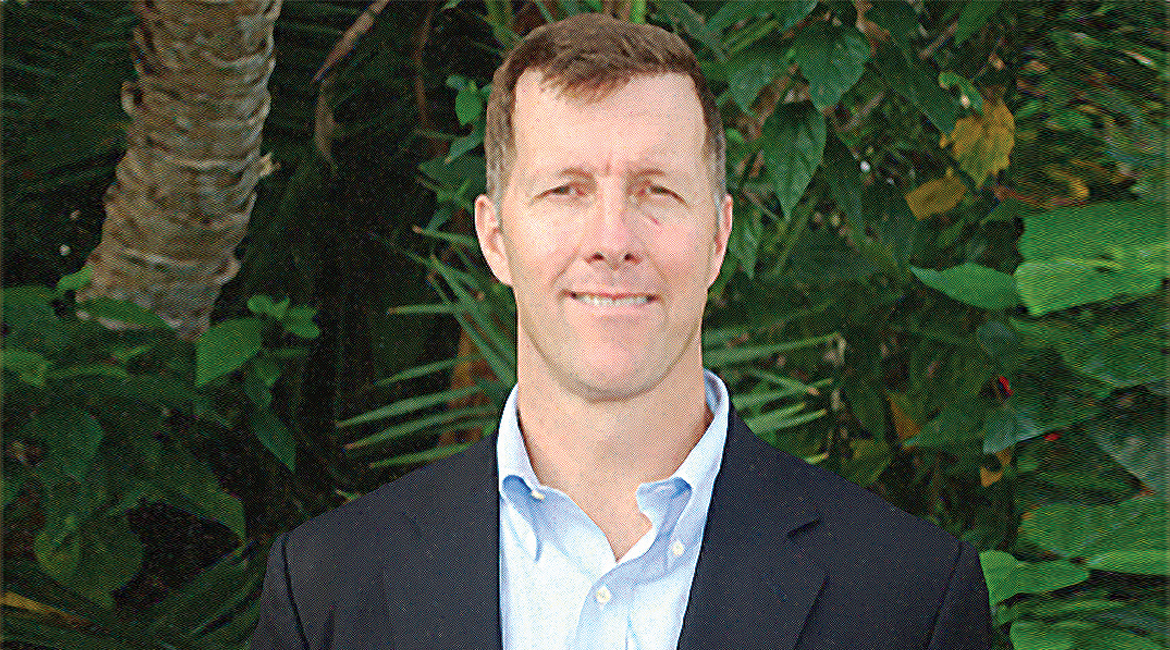
With the United States’ annual observance of Veterans Day next week, we’d like to introduce you to a very special veteran. Captain Tom Chaby served as an active-duty U.S. Navy SEAL for 26 years. Throughout his career, he spent more than 12 years deployed or stationed in over 70 countries, where he led special operations at every level. Shortly after 9/11, Chaby deployed to Afghanistan, leading a Task Unit of 50 SEALs and support personnel conducting special operations in support of the initial stages of Operation Enduring Freedom. During the latter part of the most critical fight in Fallujah, he led a Task Force of more than 400 personnel conducting full-spectrum special operations in support of Operation Iraqi Freedom. Earlier in his career, Chaby lived in South America, leading Counter Drug Operations throughout Colombia and the region. Captain Chaby’s special operations experience has been extensive, diverse, and extremely effective.
Now retired from the military, he serves as a leadership coach and motivational speaker. His corporate clients have included DEX Imaging, FedEx, Intuit, Morgan Stanley, and the Young Presidents’ Organization (YPO). In honor of his distinguished service and duty to our country, we are presenting Captain Chaby with a special award on November 19 at The Cannata Report’s 41st Annual Awards & Charities Gala. His story is incredible, which is why we consider him to be an American hero.
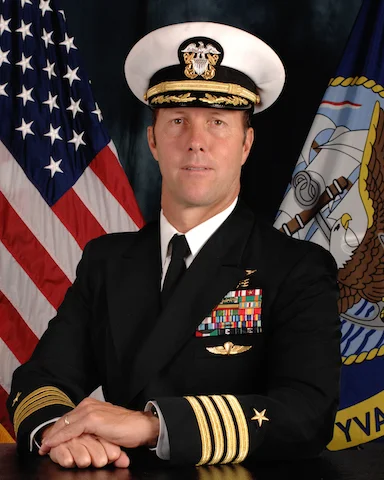
Captain Tom Chaby was an active duty U.S. Navy SEAL for 26 years. Shortly after 9/11, he deployed to Afghanistan.
What was your motivation to select the Navy, followed by the SEALs? Were you a member of NROTC while in college and, upon graduation, began active duty?
TC: I grew up in a broken family; I never met my biological father. This led me to search for connections. I desperately wanted to become a relevant member of a team, a family. At first, I found connection in sports. Later, after graduating from the University of Delaware, I found out about “The Teams,” which is the fantastic and appropriate nickname for the SEAL Teams, and I was hooked. I was immediately captivated by the camaraderie, the challenge, and the adventure.
I was already in pretty good shape, but my workouts, to help me prepare for training, were grueling and focused. After the U.S. Navy gave me a slot to attempt to become a SEAL officer, I set off for Officer Candidate School (OCS) in Newport, Rhode Island. This was the first step of a multi-year, multi-step process. Next came Basic Underwater Demolition SEAL (BUD/S) Training in Coronado, California. Yes, BUD/S is as difficult as everyone says, but during the cold nights of training, I never considered quitting. I was willing to do whatever it took to become an integral member of this very important team. On the day I graduated from training and reported to SEAL Team 3 for duty as an Assistant Platoon Commander, I knew I had finally found my people.
Of all the years of experience you had in the Navy, what do you believe was your defining moment on active duty? You can interpret that to mean a particular engagement, assignment, or memorable time that will always be with you.
TC: My defining moment on active duty happened while I was assigned to duty in Bogota, Colombia. I had been working on the Counter Drug Mission for about a year when, on this most memorable and specific morning, my life would change forever. Like every Tuesday morning while in Colombia, I was at my desk assessing intelligence reports from the counter-narcotic missions we conducted the night before when the door opened and one of the key Colombian leaders, Admiral Moreno, walked into the room. As always, there were 10 of us: eight Colombian service members and two U.S. Special Operators, sitting at our computer stations in the SCIF (Sensitive Compartmented Information Facility). SCIFs are encapsulated rooms that provide a prominent level of security to protect classified information. SCIFs are typically all business—no televisions blaring the news, no cell phones allowed, only reports that need to be analyzed.
As Admiral Moreno walked into the SCIF, it was obvious something was off. He had tears in his eyes, and what was most disconcerting was that he was walking straight towards me! As he approached, my heart beat faster. I knew something was not right. Did someone die on one of our missions the night before? Did something happen to one of my family members back in the States, and he was the notification officer? Seconds later his eyes locked with mine, and he extended his hand and said in flawless English, “From a grateful nation, we mourn with you today.” As I grabbed his hand, he explained to me that the United States was under attack, and my mind was immediately flooded with rapid-fire visions. My entire 12-year career to that point flashed before my eyes. I knew my life would never be the same, and I was good with that. Like most people, I will always remember the moment I found out about 9/11.
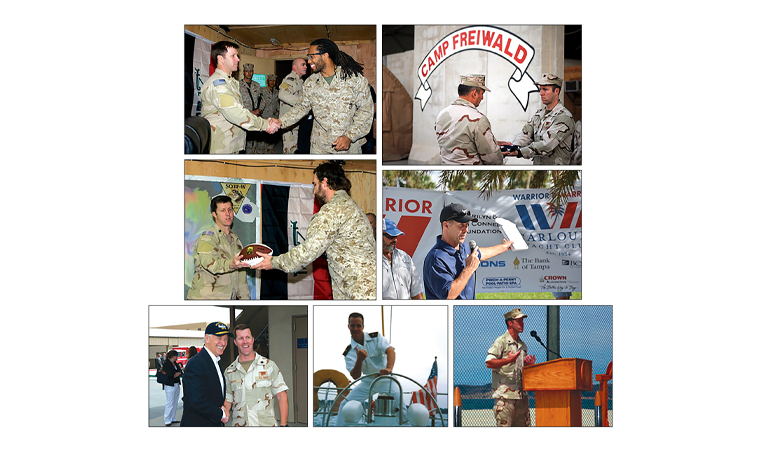
Clockwise from top left: 1. Captain Chaby (at left) thanks NFL wide receiver Larry Fitzgerald for visiting his Iraq taskforce in 2009. 2. Chaby presenting an American flag to Admiral Ed Winter in honor of Jason Freiwald, who died in combat. 3. Chaby was co-director of a fundraising effort for Warrior to Warrior program, which aids children battling cancer. 4. Chaby giving remarks in Coronado, California, as he changed command and departed from SEAL Team 5. 5. Top Gun: Chaby posing in his “whites” at the U.S. Navy’s Officer Candidiate School (Newport, Rhode Island) in 1989. 6. Then-U.S. Vice President Joe Biden (wearing cap) thanks Chaby for his service. 7. NFL defensive end Jared Allen (right) presenting Chaby with a commemorative football in ’09.
According to the Department of Defense, approximately 270,000 are separated from active duty every year. Finding a job has become a challenge for many of the enlisted. What action would you recommend they take upon discharge?
TC: The topic of transition is near and dear to my heart. Effective transition helps save service member lives. This is not an overstatement; it is a fact. I believe transitioning from active-duty service to becoming a civilian with meaningful purpose is one of the most critical actions a service member will make in their entire life. I am honored to say that 12 years ago, I helped founder Joe Musselman develop an organization called The Honor Foundation (THF), and I have been an advisor and now a board member to THF for the past six years. This 501(c) 3 was initially founded to help SEALs transition to civilian life. THF has since expanded to support all special operators (SEALs, Green Berets, Rangers). The actions that I would recommend service members take upon discharge include:
- Start early. If possible, start the process of transitioning approximately two years before your discharge date.
- Mindset is everything. Your mindset going into and throughout your transition will set the conditions for you to find success or not. How you think matters greatly. Work hard to get comfortable with being uncomfortable. Yes, leaving the comfort of the familiar military culture should make you feel uncomfortable. Acknowledge that and persevere. Realizing transitioning from the military can be a difficult challenge, but it can also be an exciting journey that you and your family (assuming you have one) can take together. Be open-minded to consider opportunities you never considered before. Be curious when asking questions to learn. Be fearless asking for help.
- Take full advantage of the traditional DoD Transition Assistance Program (TAP). This program is typically a mandated requirement for all transitioning service members. Most service members look at this program as a burden. It is actually an outstanding resource to learn how to effectively navigate transition, how to connect with local and national resources, and much more.
- Have a vision. When I transitioned, my mentor strongly recommended that, rather than pick a civilian line of work I would want to pursue, first figure out what I wanted my life to look like. I gave this much thought, and I landed on wanting my life to be relevant, and I wanted more autonomy. After landing on relevance and autonomy I started looking for the type of work that would support me having both elements. The advice my mentor gave me was perfect! It helped me find the right fit for me and my family’s situation, and I could not be happier at how my transition worked out.
- Do not be afraid to ask for help, or take it a step further and don’t be afraid to ask someone you respect to become your mentor. Most successful people in our great nation would jump at the chance to help a transitioning service member.
- Look for not-for-profit organizations that focus on transition in your geographic region. I just Googled “military transition not for profit organizations” and seven different organizations popped up. Take the time and investigate if any of these organizations are a good fit for your situation.
- If possible, leverage the Skill Bridge program. This is one of the most powerful programs DoD offers transitioning service members. You can explore a civilian job opportunity for up to 180 days while you are still on active duty! While you are still being paid!! While you still have military health coverage!!! I would do the research, find an opportunity that appealed to me, and then apply. Even if the opportunity is not a perfect fit, invest in yourself and do it! You will undoubtedly learn something useful for your transition journey, and who knows, the Skill Bridge job you take, could lead to something that is an even better fit for you within the same organization. Worst-case scenario is that you learn about something that you are not interested in pursuing.
- Realize you are an amazing candidate to fill many open job opportunities. Your honorable service provides you with many qualities that employers are looking for, including commitment, hard work, reliability, focus, and the ability to make quality decisions with incomplete information.
My final recommendation to the service members who are about to be discharged from active-duty service is to encourage them to consider me a resource. I would encourage them to reach out to me anytime.
Captain Chaby, we humbly thank you for your service.
The United States Navy Sea, Air, and Land (SEAL) Teams, commonly known as Navy SEALs, are the primary special operations force and a component of the U.S. Naval Special Warfare Command. Among the SEAL’s main functions are conducting small-unit special ops missions in maritime, jungle, urban, arctic, mountainous, and desert environments.
Support The Cannata Report’s 2026 Gala Fundraising Effort
The Cannata Report’s Gala theme, “Resilience,” is in part a tribute to the veterans fighting cancer. To donate to the Precision Medicine for Military Veterans Initiative, a partnership between City of Hope, Translational Genomics Research Institute (TGen), part of City of Hope, and Soteria Precision Medicine Foundation, please contact Frank G. Cannata at fgcannata@cannatareport.com or mail a check payable to TGen Foundation to Frank G. Cannata, The Cannata Report, P.O. Box 180, Hamburg, NJ, 07419. Alternatively, checks can be sent directly to: TGen Foundation, 445 N 5th Street, Phoenix, AZ 85004.