Press release from the issuing company:
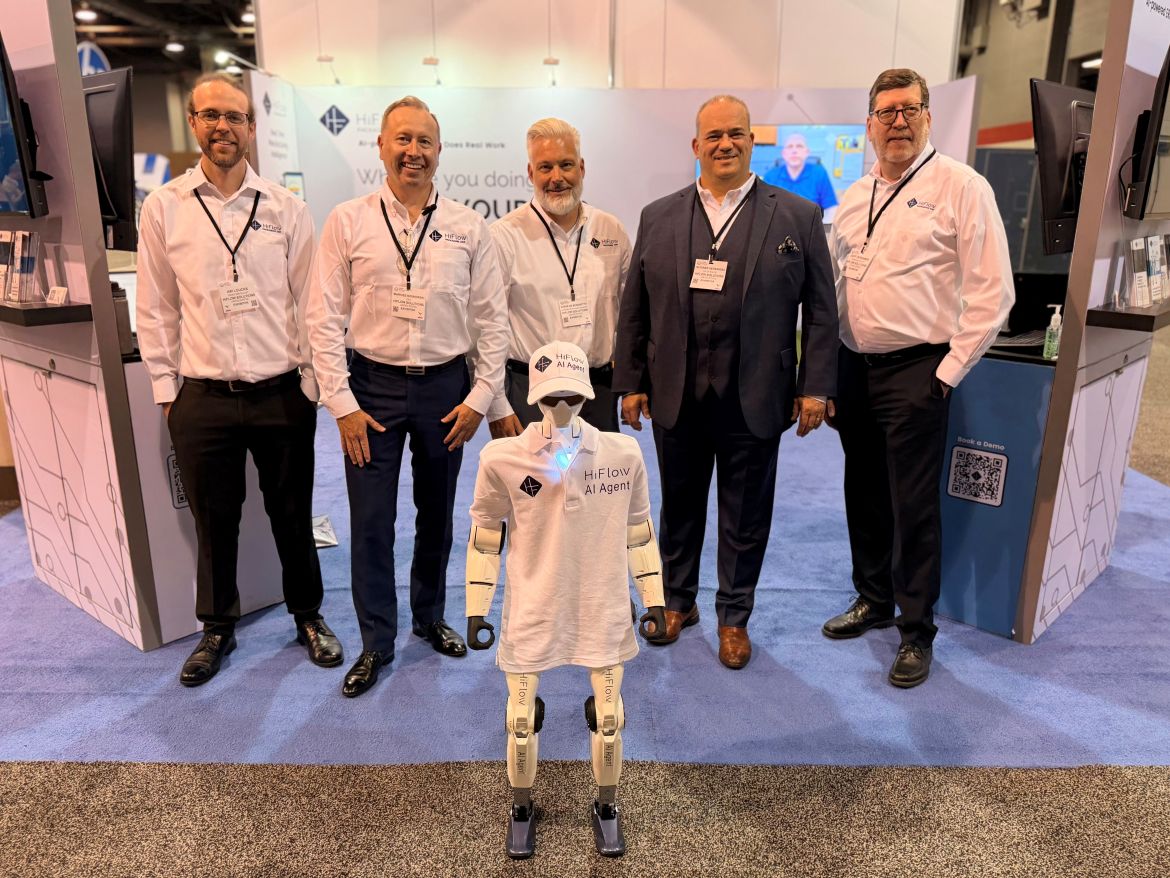
HiFlow Solutions demonstrated how AI-powered ERP can reduce repetitive administrative work at LOUPE Americas 2026, introducing its first AI Agent alongside six AI-enabled workflows for label and packaging converters.
During the September 15–17 event in Chicago, HiFlow showcased its packaging-specific ERP platform, featuring connected workflow automation, real-time data visibility and AI-enabled processes designed to give employees more time for higher-value work.
The six workflows demonstrated included Estimate Processing, Order Processing, Supplier Delivery Processing, Supplier Price List Updates, Bill of Lading (BOL) Processing, and Accounts Payable Processing.
AI That Doesn’t Just Assist. It Acts.
“LOUPE gave us the opportunity to move the AI conversation from what might be possible to what converters can actually see working today,” said Mariusz Sosnowski, CEO of HiFlow Solutions. “When AI can read the information already coming into a business, turn it into usable ERP data and eliminate repetitive entry, that’s where it begins to make a real operational difference.”
HiFlow’s AI-enabled workflows are designed to capture and structure information from emails, PDFs and other incoming documents, reducing manual entry and moving information into the appropriate ERP processes.
The objective is straightforward: let the ERP do more of the work so employees can focus on activities requiring their expertise.
Introducing the first AI Quote Agent you can actually talk to
HiFlow also introduced the first in our industry AI Quote Agent, offering a conversational approach to label estimating and quote preparation. Through guided interaction, users provide job specifications, and the Agent builds an estimate for review.
The demonstration illustrated HiFlow’s vision for Agentic Label and Packaging ERP: moving beyond systems that simply record information toward systems that help execute work. Additional specialized AI Agents are planned as HiFlow expands these capabilities.
Addressing the Challenges Facing Converters
Conversations at LOUPE highlighted workforce shortages, industry consolidation and the growing importance of operational visibility.
“Experts are aging out of the industry, plants are consolidating, and labor is harder to find and keep,” said Alfonso Hernandez, VP of Sales at HiFlow Solutions. “Having real connectivity on the shop floor is also paramount—being able to track equipment, substrate, and tools so you’re not losing time to unplanned downtime.”
Attendees also described the limitations of existing ERP systems as their businesses expand into additional packaging products and processes.
“One thing that stood out was how many companies we talked to are multi-product, not just single-process label converters,” said Steve DeBenedetto, Business Development Manager at HiFlow Solutions. “The platform has to keep pace with how converters are actually running their businesses today, not just the segment they started in.”
HiFlow combines packaging-specific functionality, flexible workflows and AI Agent technology to help converters adapt as their operations evolve.
To learn more or schedule a demonstration, visit hiflowsolutions.com .
About HiFlow Solutions
HiFlow Solutions provides AI-powered ERP/MIS technology built for label, flexible packaging, folding carton and corrugated manufacturers. With more than 26 years of packaging software development, HiFlow connects estimating, job and order management, production, scheduling, warehouse operations, business management and analytics within one robust and modern platform.
HiFlow offers a straightforward philosophy: technology should do work—not create more of it. The platform combines workflow automation, real-time visibility and AI to reduce manual work and improve productivity across the operation. Designed for flexibility, HiFlow can support changing production requirements, new equipment, additional locations, new product lines and expansion into adjacent packaging markets as manufacturers evolve.