DISCLOSURE: In addition to writing this AI coolumn, I am one of three founders of The Cricket Continuum, whose mission is Bringing Robots to the Channel, and the Channel to Robots. For 18 months, we have met with robot manufacturers, dealers, service organizations, finance companies, and software providers. This article comes from that work.
After one and a half years inside this market, here is what a copier dealer needs to know before signing a robotics OEM.
Why look at robots?
There are roughly 142,000 commercial buildings in the U.S. larger than 100,000 square feet. Together, they account for about 33 billion square feet of floor space.
Now look at the people who keep those buildings running. The U.S. Bureau of Labor Statistics counts about 2.4 million janitorial workers and nearly 7 million people working in hand labor and material-moving jobs.
At the same time, robots are already moving into these environments. The International Federation of Robotics reported more than 25,000 professional cleaning robots sold worldwide in 2024, up 34 percent, along with more than 102,000 transportation and logistics robots, up 14 percent.
For a copier dealer, none of this is very far away. These robots are going into the same buildings you already call on, around the same customers you already know. They clean floors, move materials, and perform repetitive jobs that companies are paying people to do today.
What are we actually talking about?
Droids? Bots? Humanoids? Embodied Ai?
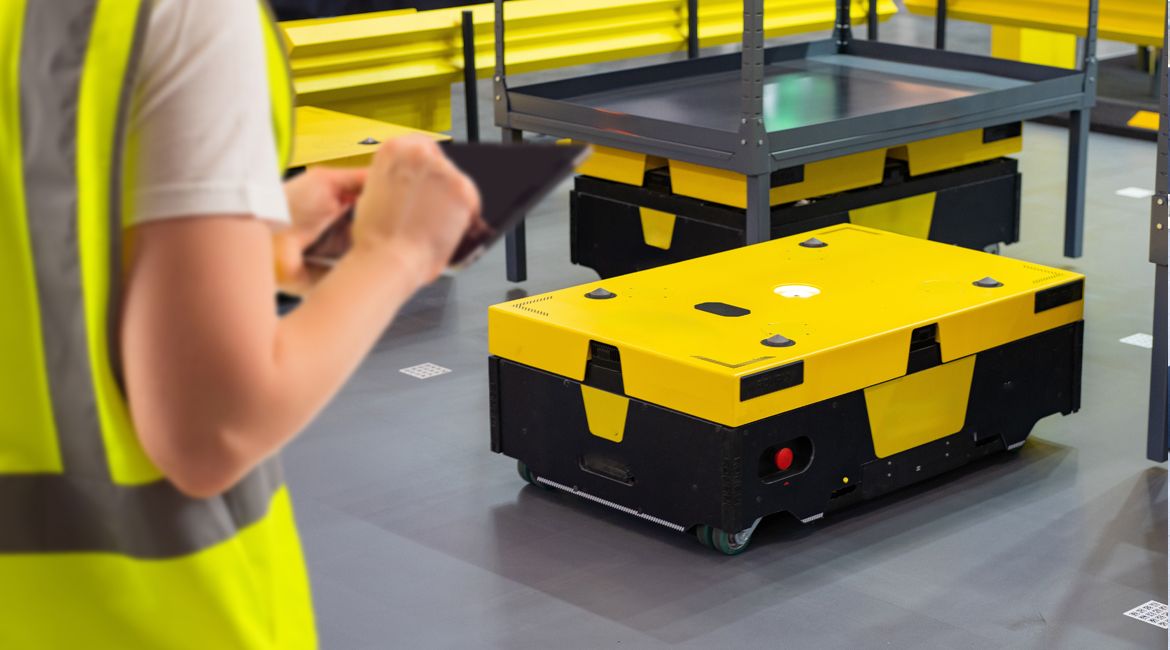
Today, we are talking about autonomous mobile robots, mostly cleaning, delivery, and material-moving devices used in B2B facilities.
Autonomous because they perform assigned tasks without someone steering. Mobile because they move. Robot because somebody had to call them something.
Think of them as output devices on wheels—without the misfeeds and toner dust. They use LiDAR, cameras, sensors, motors, batteries, and software to understand a space and move through it. The seven-step xerographic process is not exactly a toaster. If you can service a copier, you can learn how to keep AMRs running.
The channel is still being built
The robotics industry reminds me of the early copier business. Manufacturers are building products while figuring out how they want those products sold, installed, financed, and supported.
Some use distributors or integrators. Some sell direct. Some are looking for dealers. What many do not have is the mature channel structure we take for granted in imaging: established territories, dealer programs, service infrastructure, and a predictable sales process.
That is the opportunity, and it puts more responsibility on the dealer to understand exactly what the manufacturer is offering.
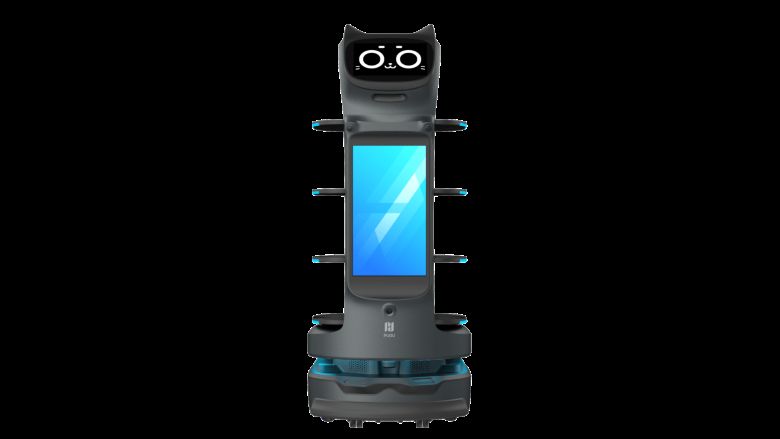
BellaBot is one of the Pudu’s AMRs that is now offered by Pulse Technology, an office technology dealer based in Schaumburg, Illinois (near Chicago).
Start with the OEM
Finding a robotics OEM is the hardest part.
When you talk with an OEM, go beyond product specifications. Ask who owns the customer and whether there is channel protection. Find out how installation and first-line dealer support works, how parts are stocked, how warranty labor is handled and how the dealer writes its own service agreement. You know how to do all of this. Asking the OEM reveals voids and opportunities.
Ask about the data coming back from the robot and whether the platform has an API. Today that sounds like a software question. Tomorrow, it becomes part of billing, service, and managing the account.
Do you need a robotics SME?
You won’t need a subject matter expert (SME) on day one.
And, I am convinced you do not need to wait for an OEM training class before your technicians start learning the machine.
Copier technicians have been teaching themselves equipment for decades. They read the documentation, listen to the machine, follow diagnostics, take things apart, put them back together, and remember what happened the last time they saw the same symptom. Good technicians are curious. They want to know why something failed, not simply which board to replace.
That instinct transfers directly to AMRs.
Formal OEM training has its place when certification, warranty work, or safety procedures require it. But the ability to learn the machine is already sitting in your service department.
The back office already looks familiar
A dealer does not necessarily need a new company or accounting platform to sell AMRs. These are serialized assets. They can be financed and placed under service agreements. They require dispatch, parts, billing, and customer support.
Sound familiar?
Track the hardware margin, installation cost, warranty support, service calls, and monthly support revenue. The systems are already there. Make sure the economics work.
Selling robots
The copier sales person has an advantage here.
How are you doing this now? How many people are involved? How long does it take? What does it cost? What part of the building creates the biggest headache?
The walk-through is still the starting point. Instead of pages per month, you may be talking square feet, cleaning routes, labor hours, or trips between point A and point B.
Start with existing customers. Warehouses, schools, hospitals, arenas, government buildings, manufacturing plants, and large offices are obvious places to look. Floor space alone does not make somebody a prospect. Look at the task. How often is it done? How much labor does it consume? Is the route predictable? Will the robot actually work there?
Then there is the way these things are being sold.
We have watched reps load a robot into the back of a car, drive it to a prospect, roll it through the front door and let the machine show what it can do. Anybody who sold copiers 25 or 30 years ago recognizes the technique immediately. Put the equipment in front of the customer and demonstrate it.
Today’s reps are selling robots out of the trunk.
We have been here before.
Is this managed print or managed IT?
Parts of both.
Managed print changed the way we sold. We stopped looking at one box at a time and started walking the building, counting devices, measuring volume, looking for cost and figuring out how the customer was actually using the equipment.
Now walk the same building again.
Instead of asking how many pages come out of the accounting department, you may be asking how many square feet get cleaned every night. Instead of finding an underused copier, you may find somebody pushing the same cart between two departments 40 times a day.
The questions are familiar. What are you doing now? How much does it cost? How often does it happen? What happens when the person doing it is not there?
Managed IT moved us further into networks, remote support, software, and data. AMRs arrive with all of that already attached. Once the robot is installed, somebody has to monitor it, service it, bill for it, and support the customer.
We already know that business.

One final thought
Print volumes have been declining for decades, and the imaging channel is still standing. Nobody needs to walk away from the business that built the dealership to look at AMRs.
What caught my attention over the past 18 months is how much of this feels familiar. The customer is familiar. The sale is familiar. The service model is familiar. Even the rep driving around with a demo unit in the back of the car is familiar.
The robotics manufacturers are still working out how their channels will operate. They are deciding who owns the customer, how territories work, who provides service, and who controls the data. Those decisions are being made now.
Copier dealers already know how to place expensive equipment inside somebody else’s business, finance it, service it, bill for it, and keep it running for years. We spent decades learning how to do that.
The robot may be new.
The business around it isn’t.
Cheers!