When we began producing a publication for office technology dealers, it was fundamentally to educate them about the Japanese culture and promote an understanding of why Japanese firms were taking certain approaches.
Why was that important? It was something I learned while working for Canon from the very beginning. It was difficult for me to understand why my Japanese colleagues had such a problem saying no. We were putting our marketing plan and approach in place to appeal to dealers and teach them the advantages of the NP 70, the first Canon plain paper copier.
In our discussions, we were asked what was most important to dealers in their evaluation of a new product. We stressed yields of toner and ease of preparing copiers for delivery. Saxon Industry acquired the rights to the Canon NP 70 and chose not to manufacture it the same way the Japanese did (despite its success in Japan, where businesses accepted it as a plain-paper copier).
Less than two years prior, Konishiroku (Konica Minolta today) had private-labeled their version of a plain paper copier to Royal Business Machines. Unfortunately, Royal did an improper evaluation of supply yields and requirements for preparing a product for installation. They overpriced it because it was the first, and dealers were anxious to compete against Xerox.

Company Founder Frank G. Cannata
Royal’s dealer sales were led by Dan Doyle, Sr., who would go on to become the owner of office technology dealership DEX Imaging. He did a wonderful job of introducing the copier to dealers but, unfortunately, the product did not perform well.
It was not the fault of the product but the fact that Royal overpriced the product and forced dealers to compete against Xerox copiers for reliability. It just took too long to prepare an RBC-1 model for installation.
A lack of communication about office technology
The long and the short of it was that Royal did not properly evaluate the product and learn from the Japanese about the volumes the average machine was producing. In other words, there was very poor communication with the Japanese, and the product failed miserably.
This was followed by Saxon Industry private-labeling the NP 70 as the Saxon PPC – 1. Canon was stunned when Saxon decided to redesign the product, and it, too, performed poorly.
I know. I was branch manager at one of the first Saxon locations in New York City. We sold 18 units in the first month. In re-engineering, they reduced the well-designed drying process to lower the cost of manufacturing. The problems were serious, and I decided I would be better off being a DSM (district sales manager) selling to dealers with compensation twice that of my previous job.
A year later, Canon decided selling the rights to the NP-70 was a serious mistake and was already selling calculators in the United States. I was recruited to help build a marketing and sales plan for dealers. Canon was going to go direct.
In my interview, I listened to the Japanese technicians talk about the performance capabilities of the NP-70. One of the major problems of the Saxon version was the time it took to prep a product for delivery.
When I questioned how long it would take to prepare a product for delivery, I was asked to follow them into the warehouse. They got one of their techs and asked him to take an NP-70 still in its shipping package. The tech, by himself, unboxed it and produced the first in the matter of less than15 to 20 minutes.
What I learned was that Royal and Saxon both had disasters because they did not follow the advice and experience that the manufacturer enjoyed in Japan with those products. In that era, the Japanese were known for very inexpensive products and did not have a great reputation as engineers. How wrong they were.
We made a hit with the NP-70. Dealers that we put on years later were grateful to us for introducing them to Canon.
Understanding and respecting the Japanese engineers and technicians was key to success. To do so, you had to understand their culture, which is so very different than ours.
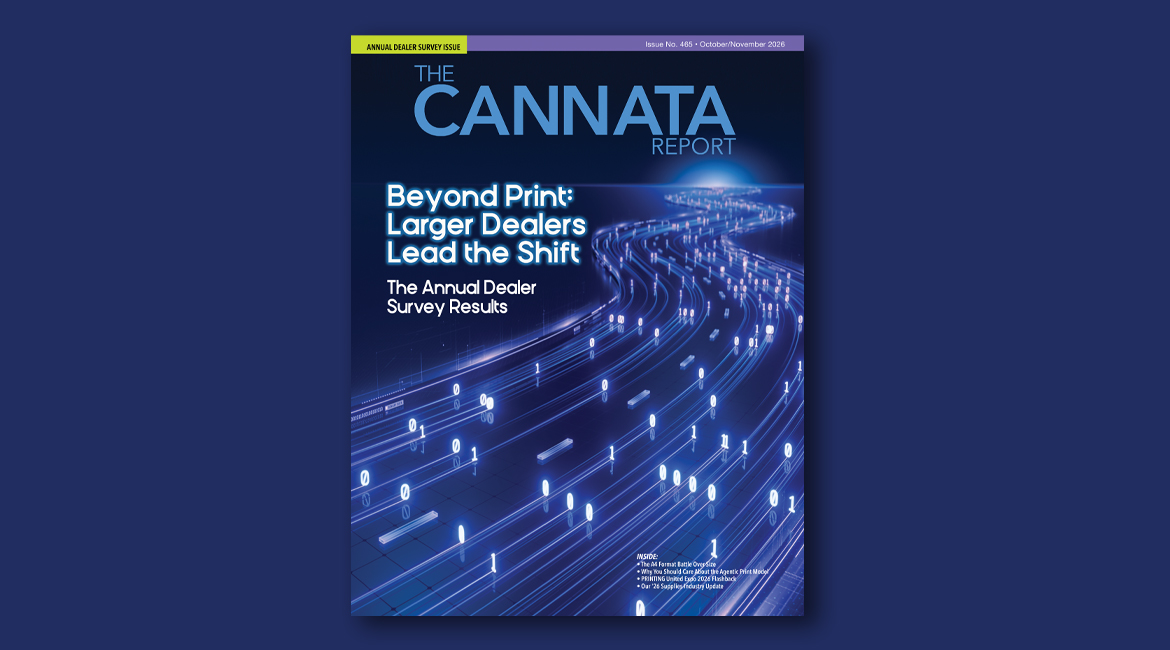
I decided to go into the business of helping manufacturers sell more Japanese products—plain and simple—in 1979. In 1982, we began publishing a report that became The Cannata Report.